
Cement manufacturers' show during the June 2023-ended quarter (Q1FY24) has indicated an intensified slugfest for market share. For instance, Dalmia Bharat (Cement) said it has lost market share in eastern India owing to lack of price discipline. Industry analysts also said that the seasonal weakness in cement prices for Q1 is showing up earlier than usual.

Despite steady loan growth, the banking sector is expected to report subdued margins in the quarter ending June 2024 (Q1FY25), driven by high demand for deposits amidst tight liquidity conditions. However, according to Bloomberg analysts, listed banks are forecasted to see a 14.5 per cent year-on-year (Y-o-Y) increase in net profit. Estimates showed that banks' net interest income (NII), and revenues from interest minus interest expenses might grow 11.9 per cent Y-o-Y.
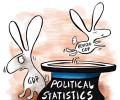
The GDP growth is estimated to come at the "deceptively high" level of 20 per cent for the April-June 2021 quarter but is far below the same in the pre-COVID times, rating agency Icra said on Wednesday. Icra said the low base of the last year, when the GDP had contracted by close to 24 per cent, "conceals" the impact of the second wave of COVID-19 infections. Economic activity is boosted by robust government capital expenditure, merchandise exports and demand from the farm sector, it said, estimating the GDP to grow by 20 per cent and the gross value added (GVA) will register a growth of 17 per cent for the June quarter.

There are hopes of a turnaround in overall corporate earnings after six quarters of single digit growth.

India's leading two-wheeler manufacturers experienced significant growth in May, propelled by strong domestic demand for premium motorcycles and scooters, channel inventory replenishment, and a recovery in export markets.

The first quarter results (Q1FY25) of Indian IT services hint towards better fiscal growth than the preceding year, but as the management commentary said, "there is still some time for the industry to be firing on all cylinders." Among the majors-Tata Consultancy Services (TCS), Infosys, HCLTech, and Wipro-it is the Bengaluru-based Infosys that has performed better, which was also evident in its full-year revenue guidance.

The rupee continued to face pressure in the first half of the current financial year (FY26), hitting fresh lows against the dollar, due to strengthening of the greenback, rising crude oil prices, and foreign outflows. Rupee has depreciated by 3.7 per cent so far in the current financial year after starting at a good note in April.

TransUnion Cibil CEO Bhavesh Jain highlights the improved retail portfolio quality in January but stresses the need for lenders to continuously engage with borrowers on credit usage and repayment, similar to the approach taken during the Covid-19 pandemic, as the impact of the Iran war on credit quality is still being assessed.

India Inc continued to grapple with muted revenue growth in the September 2024 quarter (Q2FY25) and witnessed a decline in margins and profits. The headwinds were especially severe for non-financial companies, while banking, financial services, and insurance (BFSI) firms significantly outpaced the rest of the corporate sector. The total profit of 1,353 listed companies that have released their Q2FY25 results thus far dropped by 0.6 per cent year-on-year (Y-o-Y) - the first cumulative earnings decline in eight quarters.

The market responded positively to the Q1 results of oil marketing companies (OMCs), Bharat Petroleum Corporation (BPCL) and Hindustan Petroleum Corporation (HPCL) despite numbers being weaker than consensus. BPCL's reported gross refining margin (GRM) was in line at $7.9 per barrel (bbl) in Q1FY25, which implies marketing margin stood at Rs 4.8 per litre. Standalone profit after tax or PAT at Rs 3,000 crore was down versus consensus due to under-recoveries in LPG business.

Equity investors are up for an eventful trading week ahead as the 90-day suspension period of the reciprocal tariffs announced by US President Donald Trump ends on July 9, analysts said, adding that a positive outcome from the trade negotiations could further lift market sentiment, particularly benefiting trade-sensitive sectors.

Hit by a slowdown in information technology (IT) hiring, Info Edge (India)'s results for the July-September quarter (Q2) of 2025-26 (FY26) fell short of brokerage expectations. What helped the online recruitment major offset the weak IT hiring trend was broad-based growth across other sectors.

IT major Wipro reported a consolidated net profit of Rs 3,501.8 crore for March quarter FY26, a 1.89 per cent decrease from the previous year, amidst a challenging macroeconomic environment. The company also announced a mega Rs 15,000 crore share repurchase programme.
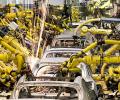
Passenger vehicle sales in India reached a record high of 4.7 million units in FY26, boosted by strong performances from major automakers and the implementation of GST 2.0.

FMCG major Hindustan Unilever Ltd (HUL) on Thursday reported a 5.97 per cent rise in its consolidated net profit to Rs 2,768 crore for the June quarter of FY26, helped by gains from a re-estimation of taxes paid in the previous year. The company had logged a net profit of Rs 2,612 crore in the April-June quarter a year ago, according to a regulatory filing from HUL, the maker of popular brands as Dove, Lifebuoy, Lux, Lakm, and Sunsilk.

Even as the benchmark and broader indices were down sharply on Monday due to escalating tensions in West Asia, the Nifty Defence index ended the session in the green.

Tata Steel's consolidated net profit more than doubled to Rs 2,007.36 crore during the June quarter, on account of "increase in net steel realisations and the planned cost-takeouts" across geographies. The Tata Group entity had posted a net profit of Rs 918.57 crore in the year-ago period.

Benchmark lending rates unchanged with repo rate at 5.25%

The "asset-right" strategy, reiterated by ITC chairman Sanjiv Puri during the company's 112th annual general meeting (AGM) on August 11, received a thumbs up from the analysts. They, however, believe that sustained earnings growth and synergies with the demerged hotel's vertical will help the stock break out from the ongoing consolidation. "The stock is expected to consolidate between Rs 420 and Rs 450 in the near future.

State-owned Oil and Natural Gas Corporation (ONGC) has reported a 10 per cent decline in its June quarter net profit on lower oil prices and stagnant production from its aging fields. The company reported a net profit of Rs 8,024 crore in the first quarter of 2025-26 fiscal year, compared to Rs 8,938 crore earning in the same period last year, a company statement said.

Capital goods companies are likely to report double-digit growth in sales and profit for the first quarter of the 2023-24 financial year (Q1FY24), according to analysts. The performance will ride on lower raw-material costs and healthy execution of orders. Sales by capital goods companies are likely to increase 13-20 per cent year-on-year (YoY), five domestic brokerage firms said.


Public-sector banks (PSBs) are attracting the attention of investors and the PSU Bank Index has gained nearly 10 per cent in the past month. PSBs have seen return on assets (RoA) climbing to 1 per cent in 2024-2025 (FY25) and margins are believed to have moved up further in the first half of this financial year (H1FY26) with asset quality remaining stable.

Cement manufacturers have hiked prices after a challenging Q1FY25, and Q2FY25 (so far) when general elections and seasonal factors cut down on construction activity. The August prices are currently around 3-6 per cent above July 2024 but may not be sustainable in the face of weak demand. H2FY25 may see realisation growth which, if it happens, would drive average operating profit/tonne improvements in H2FY25 over a muted H1FY25.

In a step towards diversifying its resource base and securing green energy minerals, India is poised to launch its first-ever offshore mineral auction in the first quarter of 2024, announced Union Minister of Mines Pralhad Joshi during the launch event of the National Geoscience Data Repository portal. The government plans to hold auctions in March, offering 10-15 blocks for bidding. Meanwhile, the ministry of mines is currently developing rules and regulations for offshore mining.

The country's current account deficit widened marginally to $9.7 billion or 1.1 per cent of GDP in April-June 2024, as against $8.9 billion or 1 per cent in the year-ago period, Reserve Bank of India said on Monday. The crucial number representing the country's external sector strength has come on the heels of a surplus of $4.6 billion or 0.5 per cent of GDP recorded in the preceding January-March quarter. The Reserve Bank attributed the year-on-year widening in current account deficit to a rise in merchandise trade gap which was recorded at $65.1 billion in Q1 FY25 as compared to $56.7 billion in the year-ago period.
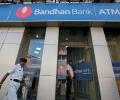
Bandhan Bank has declared disappointing results for the first quarter of the 2023-24 financial year (Q1FY24). While the market has been braced for known issues around microfinance exposures in West Bengal and Assam, there is higher stress in the portfolio. This means higher credit costs and poorer asset quality, leading to target downgrades by analysts.

Private equity investments in Indian real estate dropped 15 per cent in July-September to USD 819 million amid global uncertainties, according to property consultant Anarock.

Leading FMCG companies in the country are expecting their sales growth numbers in high double digit in the April-June quarter, a period when the broader market was severely impacted by the second wave of the COVID-19 pandemic. FMCG companies such as Godrej Consumer Products Ltd (GCPL) and Marico, in their quarterly updates to bourses, informed about double-digit sales growth. While Tata Consumer Products Ltd (TCPL) MD and CEO Sunil D'Souza in an interview had told PTI, the Tata Group FMCG firm expects higher growth in the Q1/FY'22 over Q4/FY'21.

The gap between credit and deposit growth in the banking system is expected to decline sharply to 80 basis points (bps) in the next financial year from an average of 386 bps over the FY22-Q3FY25 period, according to rating agency India Ratings. This would be against the backdrop of sharp moderation in the incremental loan deposit ratio (LDR) of the Indian banking system to 85 per cent in February 2025 from 117-118 per cent in the same month of 2024.

Despite the best ever quarterly net profit of Rs 3,091 crore during April-June of financial year 2023-24 (Q1FY24), challenges are mounting for InterGlobe Aviation-run IndiGo in the near term, said analysts. Given this, most brokerages have retained their ratings from 'buy to underperform', as well as their target price for the stock. For instance, Motilal Oswal Financial Services has retained its 'neutral' rating on the scrip as it believes the low-cost airline is facing teething issues at present.

Vedanta, a conglomerate in mining and metals, has seen a surge in its share price on the back of multiple triggers. Its demerger appears to be on track, a strong non-ferrous commodity cycle is boosting margins, and silver bulls are interested in Hindustan Zinc, its subsidiary.

The country's largest private lender HDFC Bank's bad-loan write-offs doubled to Rs 3,100 crore in the April-June quarter (first quarter, or Q1) of 2021-22 (FY22), from the level of Rs 1,500 crore in the same quarter of 2020-21 (Q1FY21). It also offloaded its non-performing assets (NPAs) amounting to Rs 1,800 crore in Q1FY22 to maintain a robust asset quality profile. It had jettisoned NPAs worth Rs 1,000 crore in the last quarter. Lenders knock off stress assets from books after making full provisions. Their right to recover dues from delinquent borrowers remains intact after the write-downs.

The Reserve Bank of India's 2024 norms for the voluntary conversion of Small Finance Banks (SFBs) into universal banks, particularly the subjective 'diversified loan portfolio' criterion, are proving to be a significant hurdle, with Ujjivan SFB and Jana SFB having their applications returned.

Cholamandalam Investment and Finance's (Chola) share has yielded one of the best returns in the last month. The company has sustained assets under management (AUM) growth at 7 per cent quarter-on-quarter (Q-o-Q), and 35 per cent year-on-year (Y-o-Y) in Q1FY25. Scaling up of new businesses now contributes to 13 per cent of loans (vs 10 per cent in Q1FY24).
The combined profit before tax of 748 companies, which have declared their results for Q1FY21, is down 46 per cent YoY. Their net sales went down by a quarter as the Covid-19 lockdown led to a sharp fall in economic activity.
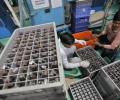
Escalating geopolitical tensions in West Asia are beginning to disrupt India's automotive supply chain, leading to rising commodity prices, logistics bottlenecks, material shortages, and pressure on consumer demand, with two-wheeler makers already raising prices.

The exit of Larsen & Toubro (L&T) from the Hyderabad Metro is a long-term positive for the stock. It could be a bullish trigger, alongside higher international orders, and new opportunities in segments like defence and data centres.

Private investment projects constitute well over 70 per cent of the nearly Rs 34 trillion of fresh investments announced in H1 this year.
